banner

Trip blogs from: Brazil: Pantanal and the Atlantic Mountains

Home Biota: what is it? Animals Plants Mammals Birds Insects NL EN

This page shows the blog pages. For most trips, there is one blog per day. Clicking on the photo for a day will take you to a slider: a photo carousel that shows the photos large. Clicking on the title will take you to another page with more information about the photos.

The link Top will take you back to the top of this list.
TitleDay 2: Hotel Fazenda
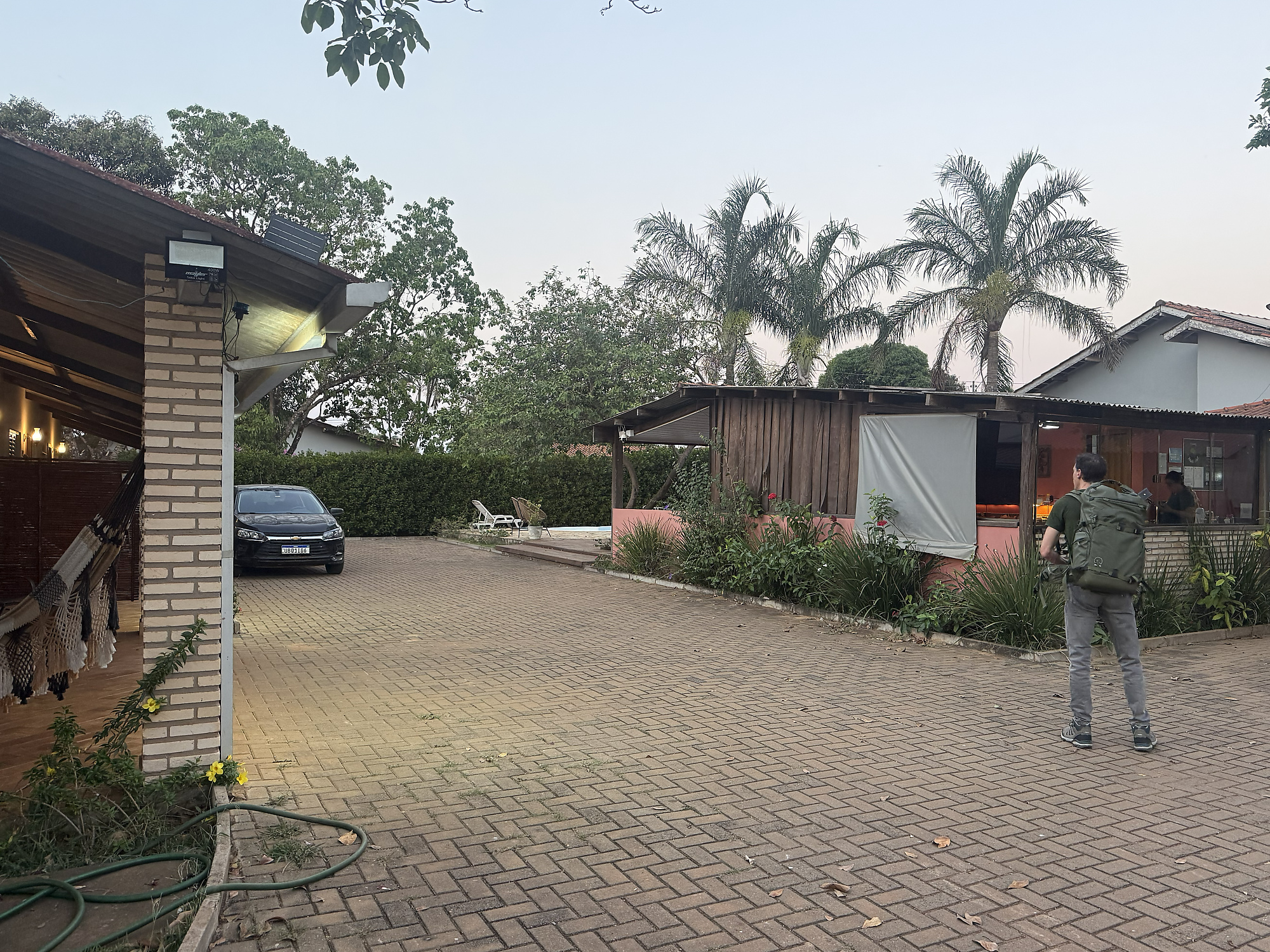
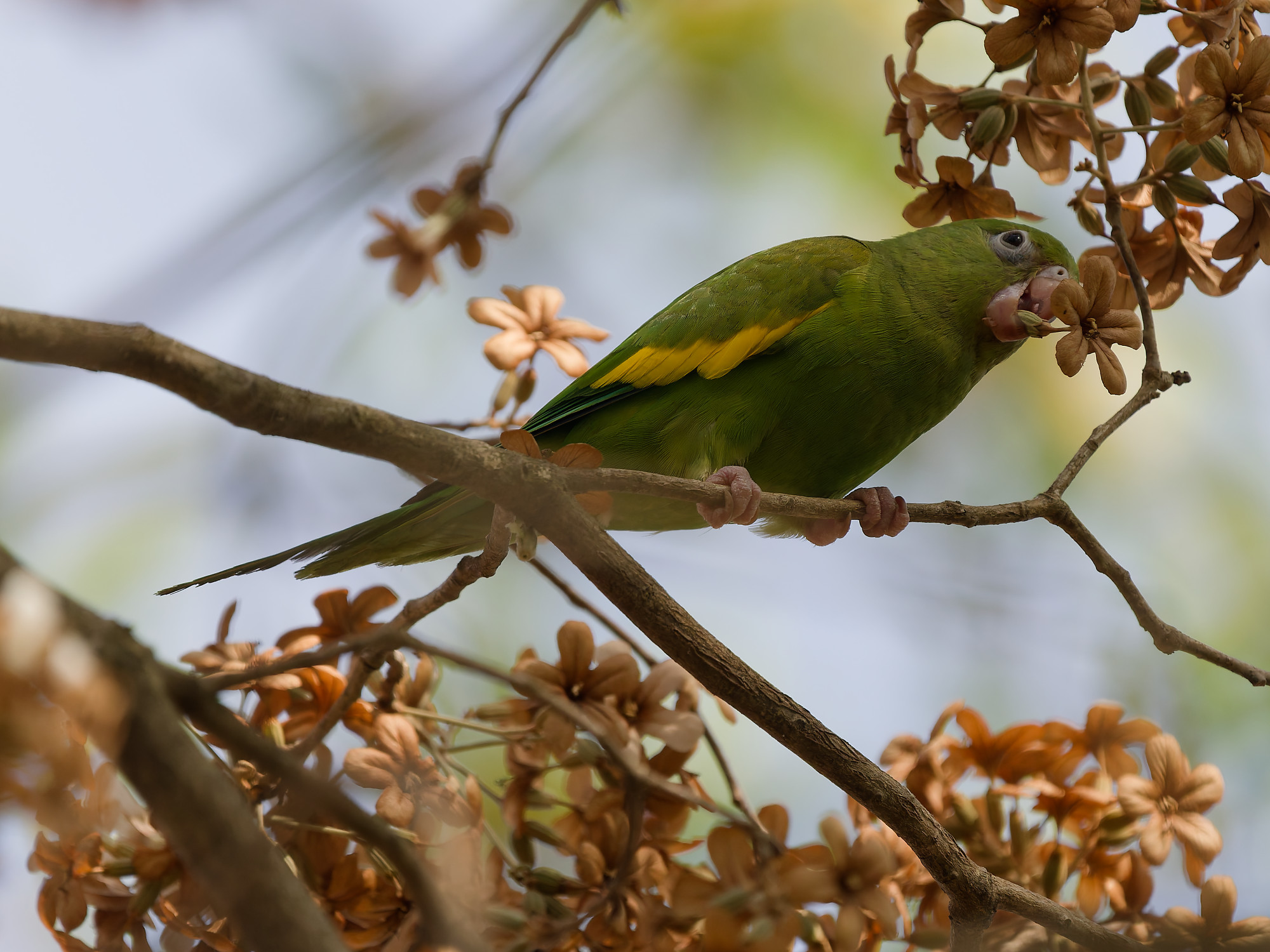
I arrive at the hotel at 2 a. m. It is pleasantly warm, at 28 degrees in the middle of the night. The next morning, a few hours later, I amuse myself with birds in the garden. I know most of the species, but there are also three new ones. The garden is not large, but you can easily walk around the surrounding area. When I walk around a bit more in the afternoon, I find few birds left. I can imagine that they find 38 degrees quite warm in the sun as well. It is, however, a very suitable hotel for working on jet lag.
Date:2026-08-28
TitleDay 3: To the Harpy Eagle
For the trip with the group, BirdingBreaks has arranged a trip to a harpy nest, where one young is waiting for food from the parents. A harpy is one of the largest birds of prey. The young is fed on the nest for at least 8 months. First literally on the nest and later in the trees around the nest. Until the 14th month, the young receives hunting lessons and food. Then he or she (it was a she) has to save himself. A harpy pair has a maximum of one young every 2 years. In addition to the harpy, we also saw new species for me around the lodge.
Date:2026-08-29
TitleDay 4: A beautiful woodpecker in the forest
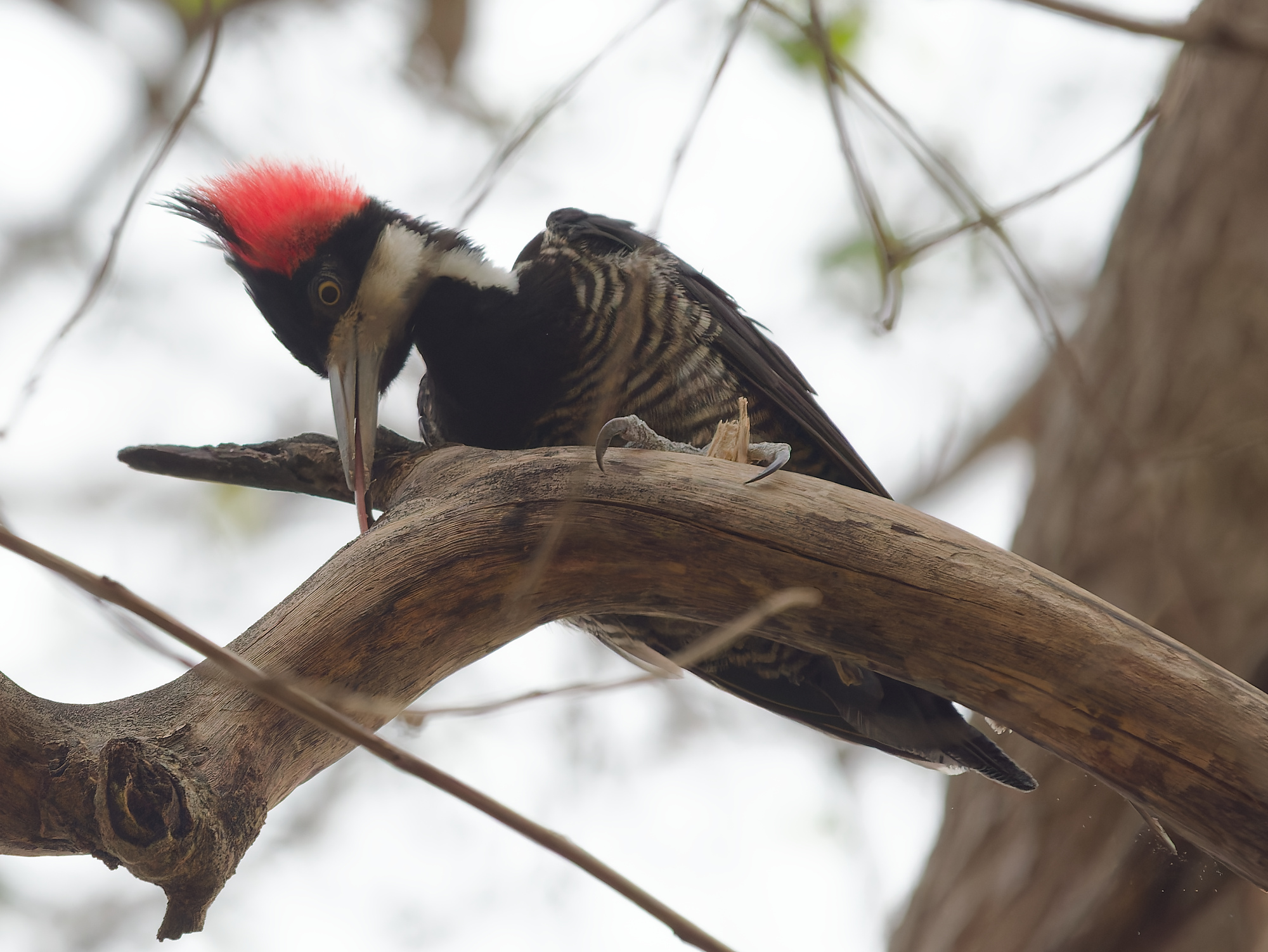
Today, I first walked around the grounds of our hotel, the Pousada Currupira. There are many blackbirds and other black birds that I wouldn't be able to identify without a guide. The young harpy eagle has moved to another tree nearby, but she is returning to her own tree. She is also practicing in the tree, performing flying jumps from branch to branch. While waiting for a parent, we entertained ourselves with a trogon and a very beautiful woodpecker. After lunch at the hotel, we took a detour to the hotel in Cuiaba, where we met the other birdwatchers.
Date:2026-08-30
TitleDay 5: Bridal Veil Waterfall of Circuito das Cachoeiras
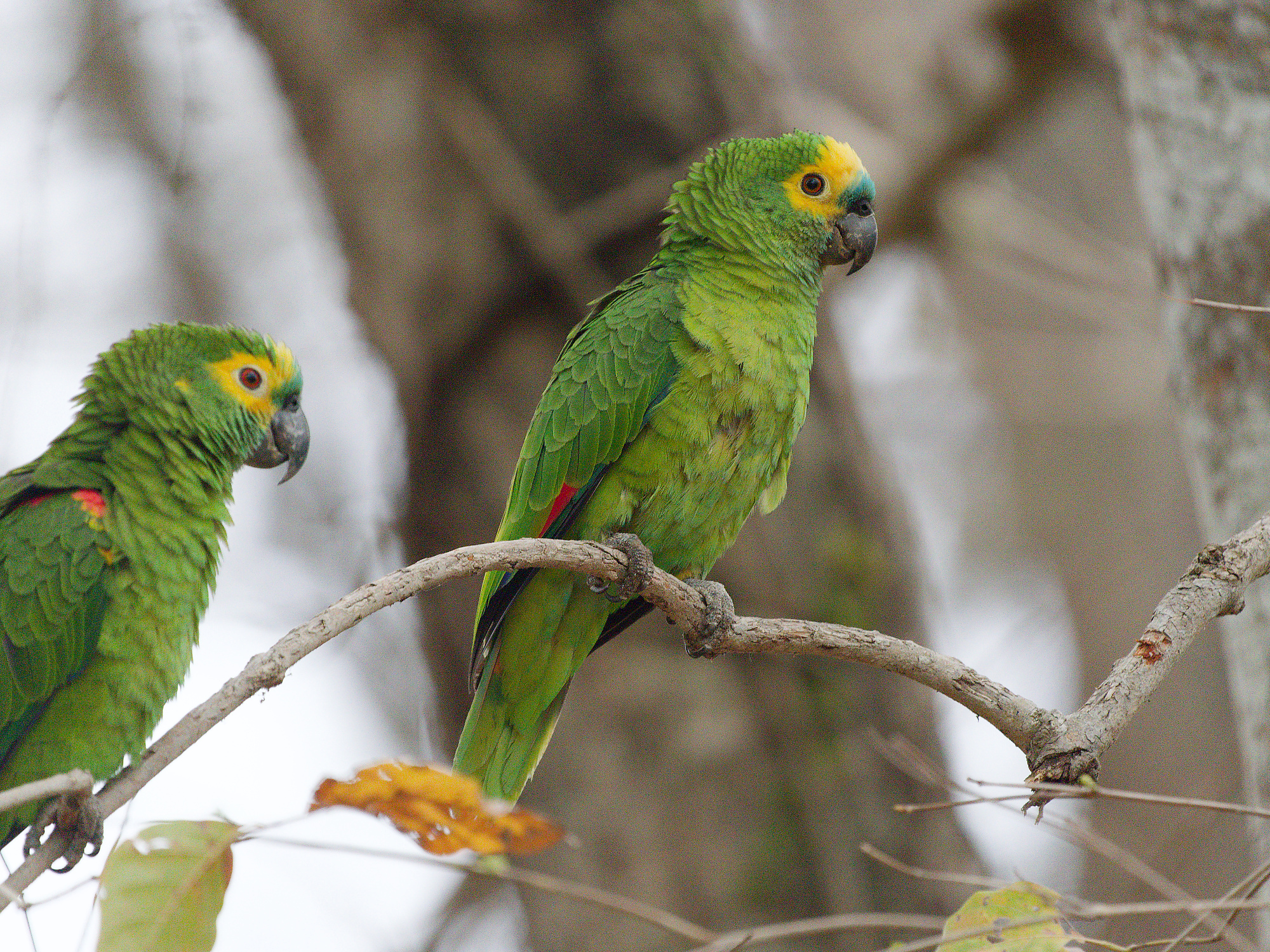
Day 5 is the fifth day since my departure from Amsterdam. For the BirdingBreaks group, it is the 2nd day, so the first day for birding. We are heading north to a hotel for the first few days. The hotel is situated much higher (830 m) than Cuiaba (150 m). In the afternoon, we go to a very beautiful gorge that ends in a high rock face with a waterfall. But as birders, we are going for the parrots flying in front of the rock face. With more time and better fitness, it is also a beautiful hiking area.
Date:2026-08-31
TitleDay 6: The cerrado of the Chapada des Guimareas
Today we drove and walked through the cerrado. The cerrado is a South American form of savanna, mostly consisting of low, dry forests interspersed with vast grasslands. We are going to explore the cerrados under threatening skies. During the walks, we spot a pheasant cuckoo, a bird that is rarely seen. Unfortunately, it rained us out. According to the guide, rain in September is very unusual. The group did another afternoon walk, but I rested.
Date:2026-09-01
TitleDay 7: Jamacá das Araras
On birding trips, we often visit people who have created beautiful gardens or small parks—places that are delightful to spend time in. They are appealing to birds because there is food to be found, and to people because the birds are easier to observe. Mario is one such person. We saw many beautiful birds, and the Ornate hawk-eagle circling low overhead was truly special.
Date:2026-09-02
TitleDay 8: The Pantanal
We leave the mountains north of Cuiaba and drive into the Pantanal. The surroundings are immediately very different: from a mountain range with beautiful peaks and gorges, we arrive at a virtually flat area. At least, that is how it seems, but the altitude as we drive in is about 150 meters above sea level, and 50 meters by the end of our journey. We are there during the dry season, which means the birds are close to waterholes. As a photographer, that is nice. We are immediately treated to birds new to me, such as the Plumbeous ibis and various guan species.
Date:2026-09-03
TitleDay 9: Pousa Alegre
We arrived at the lodge last night. For the next few days, we will be driven around in open cars. A bit like in Africa, but here you can just get out: there are no dangerous animals. It is also nice that the terrain is quite flat; it is not as bad as in South Africa or Tanzania with potholes in the dirt roads. Today we are already seeing many of the special animals of the Pantanal, including tapirs, pigs (White-lipped peccaries), and capybaras. As you can see, we have seen a lot of species!
Date:2026-09-04
TitleDay 10: Aymara Lodge
In the morning, we first look for new species at the Alegre Lodge. The most spectacular one is the Black-throated Woodpecker. A few dozen kilometers further south, we head to another lodge. This one looks nicer than the previous one; I have nesting macaws right outside my window. Some of the species are different again, and there is less water here than at the first stop.
Date:2026-09-05
TitleDay 11: More birds at the Aymara Lodge
The location is very productive. We walk and drive through the area with the guide. There is a wide variety of birds that are special to me: parrots, woodpeckers, mouse woodpeckers, and trogons. We find many new birds again, including the small and very beautiful manakin.
Date:2026-09-06
TitleDay 12: To the Jacaré Houseboat
We leave the lodge in the northern half of the Pantanal and head to the end of the road. We are taken by speedboat to a hotel boat, where we are taken around and fed for three days. From the boat, we head out into the river arms and tributaries, where we mainly hope to see jaguars. We already see the first one today. There are also many birds, of course.
Date:2026-09-07
TitleDay 13: Jaguars spotting in the Pantanal
Our guide has been working in the wild for 30 years. In 2000, jaguars were extremely rare in the Pantanal. Since then, the government and farmers have concluded that they can earn more from tourism than from the already extensive livestock farming. The area is large enough for a lot of livestock during the dry season, but during the wet season, the farmers cannot find places for the cattle. Now, jaguars are easy to spot during the dry season because they feed on caimans. The caimans gather in the river arms where there is always water. The jaguars only have to drop onto a caiman for food for their offspring. It is not that simple, of course, but the jaguars live off the caimans during this period. The jaguars, even those with cubs, willingly show themselves to the tourists. For a mother with two cubs, as many as 30 boats quickly come to look. The jaguars observe it all calmly.
Date:2026-09-08
TitleDay 14: Birds in the streams
We already have many photos of jaguars and otters, so today we are going in search of birds. We will still stop for a jaguar we see, but we will no longer react to a jaguar sighting at full speed with the boat. Consequently, we see more other species today and have many beautiful birds in front of our lenses. One of the most beautiful birds from Tucson, the Vermilion flycatcher, can also be found here.
Date:2026-09-09
TitleDay 15: To the north
In the morning, we take two boat trips: first to a site on the mainland (accessible to cars) and then a short boat trip on the river. After lunch, a van arrives to pick us up for the last hotel: Hotel Mata Grosso. Along the way, we see many birds. We also experience that it can rain.
Date:2026-09-10
TitleDay 16: The last Pantanal day
We are staying at the Hotel Mato Grosso, the final stop of the group tour. After a morning spent mostly with delightful parrots, a taxi picks us up for the drive to the airport. The airport is small and easy to navigate, and we have plenty of time to wait. My next destination is Rio de Janeiro.
Date:2026-09-11
TitleDay 17: REGUA Lodge
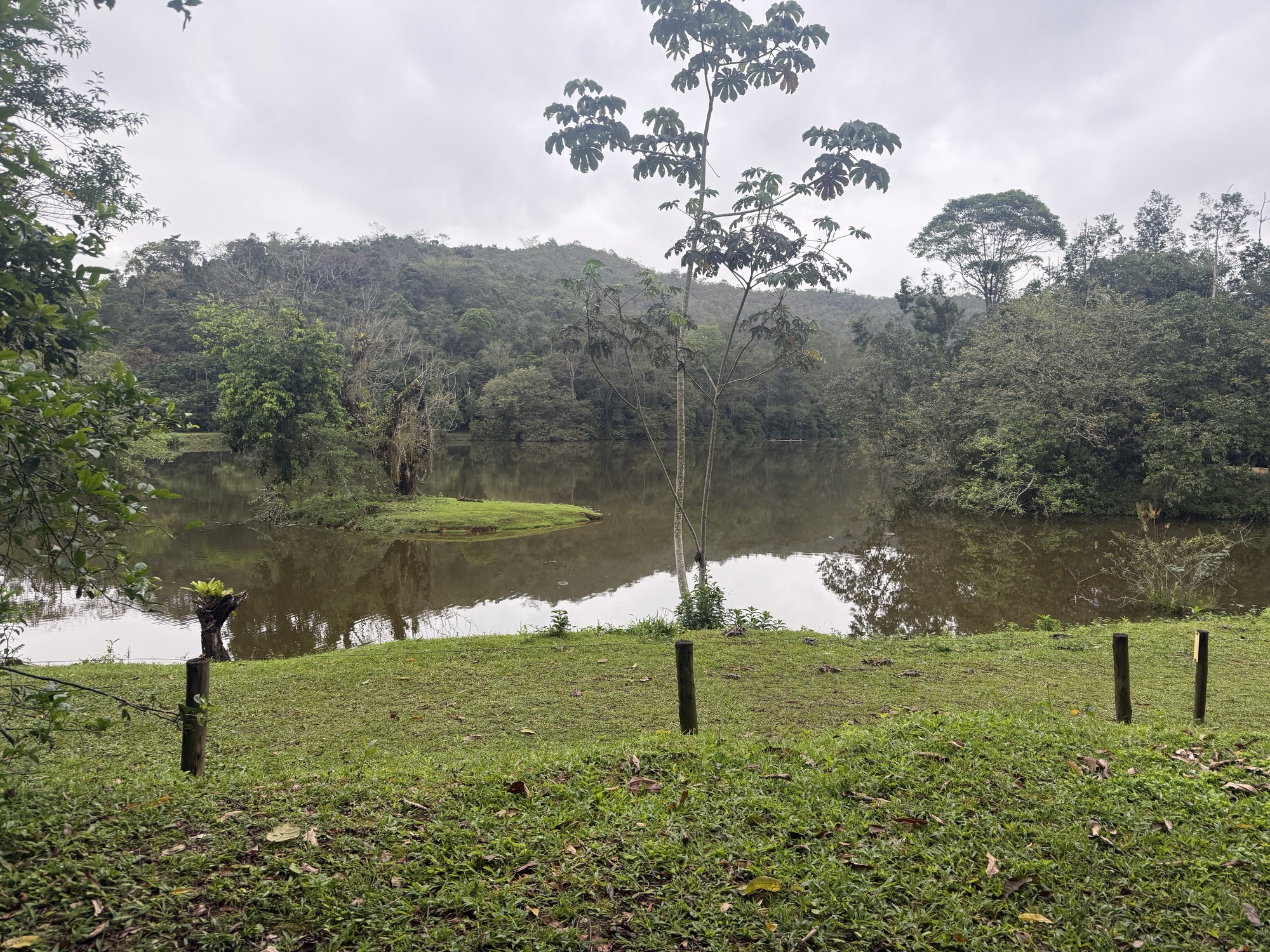
For the past nine days, I have been a guest at the REGUA lodge. REGUA is a non-profit organization that purchases land around the Guapiaçu River and (re)forests it. Additionally, they encourage and facilitate research and education. Their primary goal is to guarantee water storage and biodiversity. They own areas ranging from 35 to 2,000 meters in altitude. Today's photos are from a walk around the small lakes on their property.
Date:2026-09-12
TitleDay 18: The birds around the REGUA office.
The guide drives me around in a classic Toyota. The model dates from the post-World War II era; these cars were manufactured in Brazil between 1958 and 2001. I thought it was a handsome car, though I found it difficult to climb into. Just like yesterday, it was a wet day—mist, haze, drizzle, and steady rain. That was no problem for the birds, and the guide knew exactly where to go to find them.
Date:2026-09-13
TitleDay 20: Parque Estadual dos Três Picos
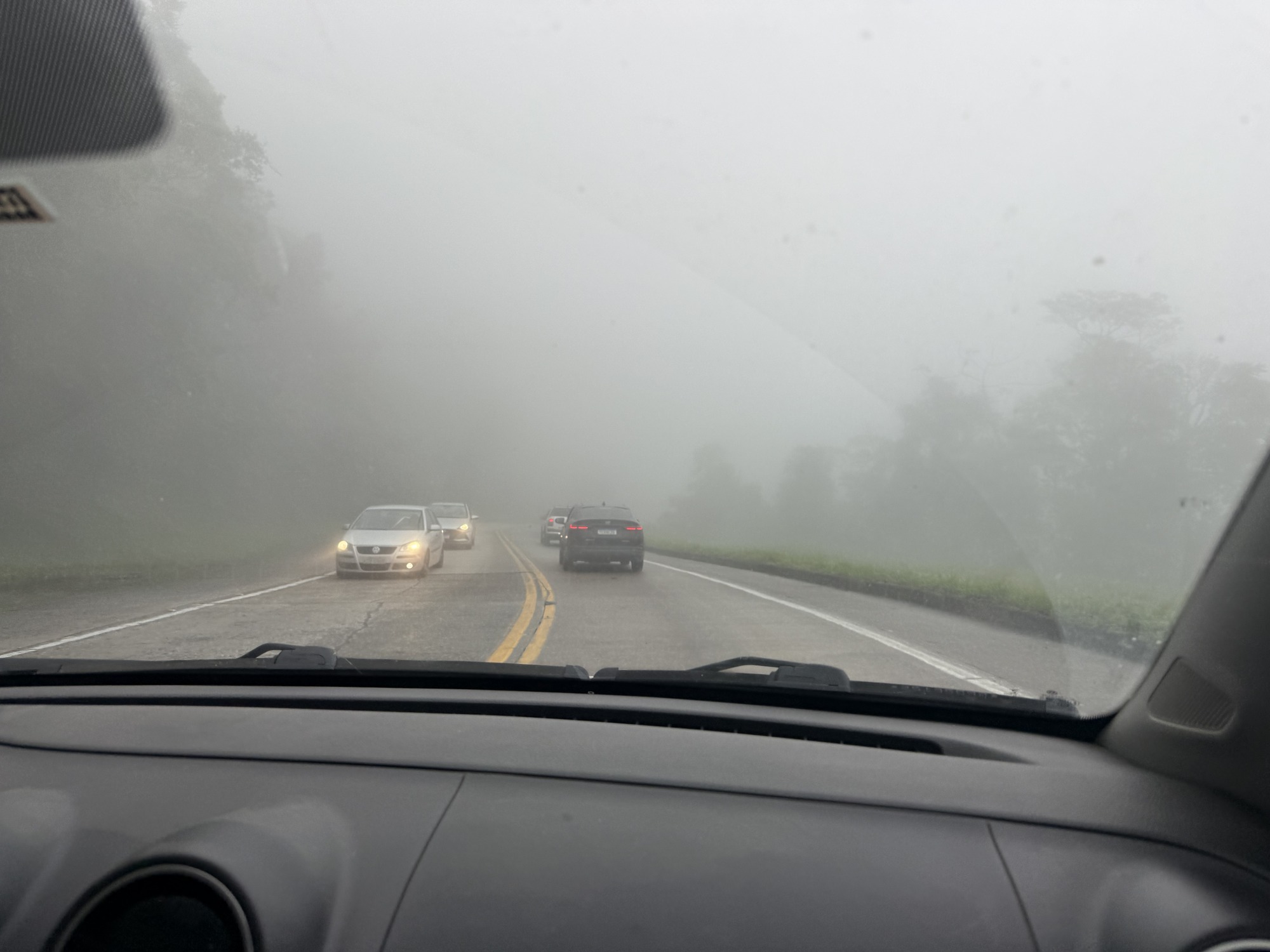
Today we drove up to the Three Peaks park. The entrance was at an altitude of about 1,000 meters, and the highest peak stood at 2,366 meters. The birds seemed accustomed to the mist; eventually, there was some activity. However, we were walking mostly in the fog, which was clearly visible in the photos. Fortunately, you can use a computer to make the mist dissipate a little.
Date:2026-09-15
TitleDay 21: Into the mountains
Today, the owner of Regua is driving me around. He maintains his contacts, picks up a few things, and takes us to Itororo, where they have many feeders. Due to the altitude, 1,200 meters, we have partially different species again.
Date:2026-09-16
TitleDay 22: To the coast
Today there is a new guide, who works very systematically. He makes a list of all the species I haven't seen yet, hundreds of them. He concludes that he can find as many as 50 new species for me. That seems impossible to me, and it turns out to be so. He does find a rare mountain antwit, where the male and female show themselves.
Date:2026-09-17
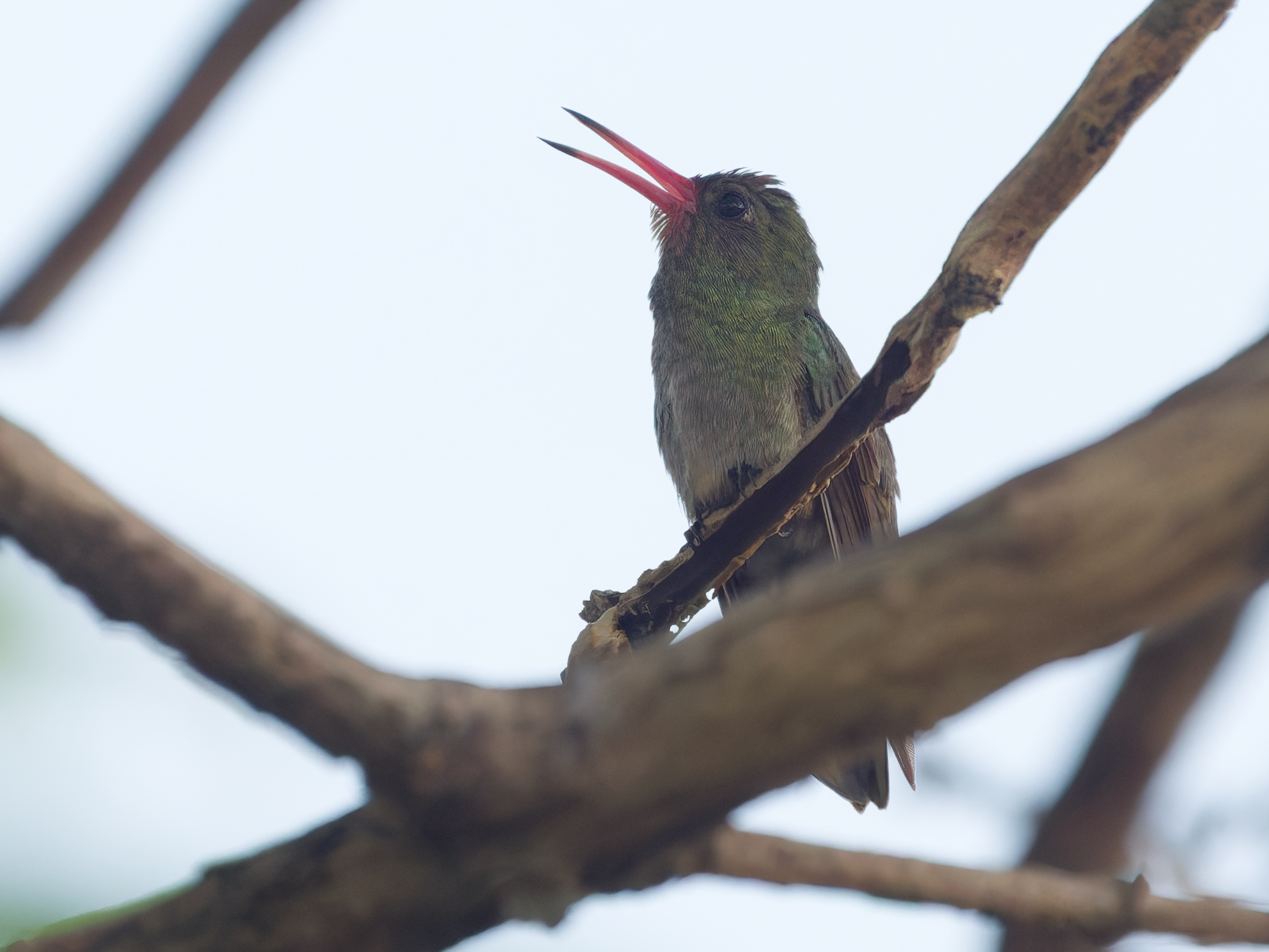
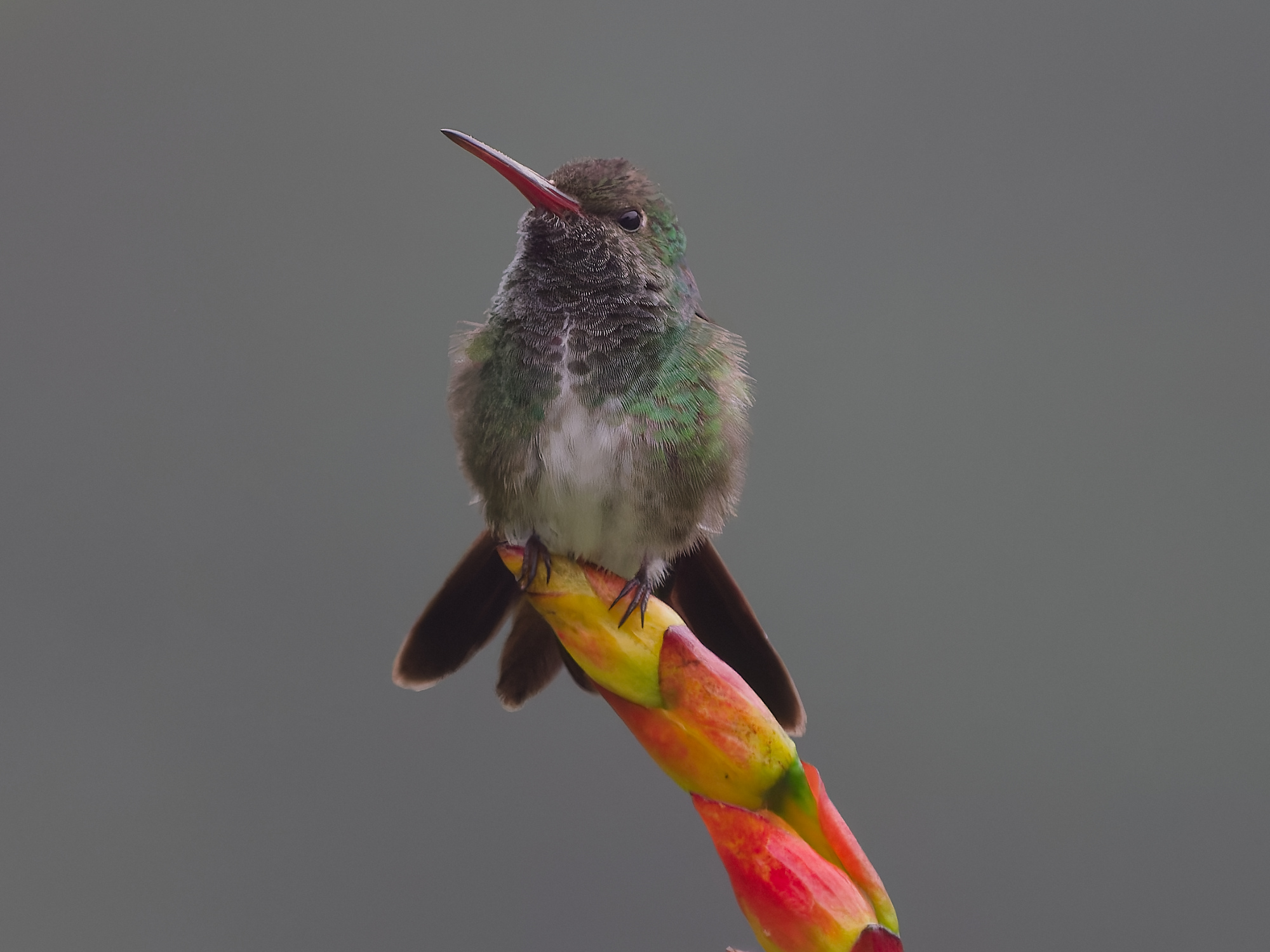
Amazilia fimbriata / Glittering‑throated emerald / Franjeamazilia
TitleDay 23: Lowlands around the REGUA complex
The guide has to split up today: with me in the morning, and with another client in the afternoon. It will be a drive in the neighborhood, with the usual new birds. That is this man's specialty, I think. There are a great many different species. Sometimes the male and female are equally colorful, but often the females are brownish. That makes it difficult for me to tell them apart.
Date:2026-09-18
TitleDay 24: Sorting through photos
Today was a rest day. That provides the opportunity to start with the very large quantities of photos. So, few new photos today.
Date:2026-09-19
TitleDay 25: The last day
On Sunday morning there was a guide, but no car. We took a walk around the grounds at REGUA, but that didn't yield much. At 4 p. m. , we left for Rio de Janeiro airport. The airport is very large, but the care for disabled passengers is excellently organized: you receive personal assistance from the check-in counter to the aircraft door.
Date:2026-09-20